FREE GAMES WITHOUT PAY-TO-WIN
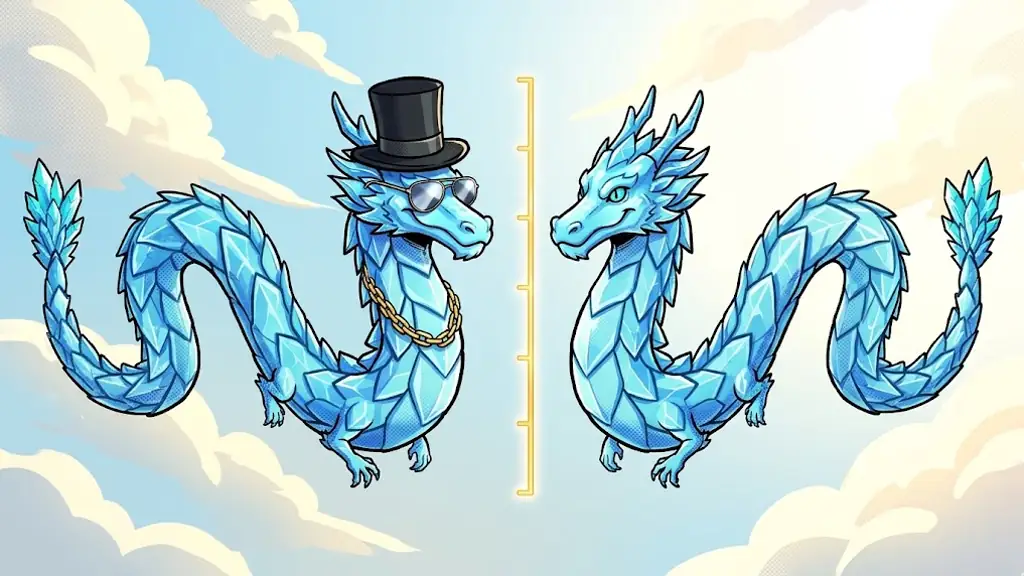
Short answer: a free game is fair when nothing you can buy makes you stronger, the server (not your device) decides every result, and the rules are public and the same for everyone. The seven questions below let you check that in a few minutes – and we answer each one honestly for Dragons League.
On this page
Why "free" is not the same as "fair"
A free game still needs to earn money. Most do it with ads, with cosmetics, or by selling advantages. The first two keep the game fair; the third turns it into a contest of wallets, where the player who spends the most wins the most. The difference is rarely obvious from the front page, which is why a checklist helps.
The seven questions
1. What does the shop sell?
Good: looks – skins, hats, trails, effects. Bad: anything that changes speed, size, damage, health or the time you must wait. In Dragons League, gadgets and dragons are cosmetic only. Might, Spirit, speed, damage and hitboxes are identical for every dragon and every look. At the moment nothing is sold for real money; if Dragon Gems are ever offered, they will buy looks only.
2. Who decides the result?
In a fair online game, your device sends what you want to do – steer here, fire now – and a game server decides what happens. If your own device decides, anyone with a modified browser or app can lie about it. Dragons League runs every rule on its servers; a modified client changes only what is drawn on its own screen. We explain this in A fair arena.
3. Are the rules public and the same for everyone?
Good games publish how they work. Dragons League's numbers – orb values, Spirit costs, cooldowns, armor ratios, zone timings – are written in our guides, and they come straight from the game's own rules, so you can test them yourself.
4. Can you see attacks coming?
Fairness is also about information. A charged Breath shows a dashed aim line to everyone nearby, and the attacker moves at half speed while charging. When you lose, you can always point to the sign you missed.
5. Are there timers, energy bars or random boxes?
Waiting timers that can be skipped with money, energy that stops you playing and random reward boxes are the usual ways a game turns time and luck into revenue. Dragons League has no energy system and no waiting timers; you play as long as you like, and you see the price and the item before you buy anything in the shop.
6. Does progress depend on playing or on paying?
Coins in Dragons League are earned by playing – every run, daily quests, the daily reward and trophies – and they are never sold. They unlock cosmetics and let you open the Survival and Team Battle modes after a few free matches. That is progress through play, not through payment. A friend's invite lets you join their match even if you have not unlocked it yet.
7. Are the ads respectful?
A free game is usually funded by ads, and that is fine when they are honest and limited. Dragons League shows ads on the website and in the short break before a match – never in the middle of play – and in Europe, the UK and Switzerland a Google-certified consent message asks for your choice first. Details in our privacy policy.
Red flags in one glance
- "Pay to unlock more health / damage / speed" in the shop.
- A countdown that can be skipped for a fee.
- No published rules, or numbers that change without notice.
- Results that your device reports instead of the server deciding.
- Pop-ups or ads in the middle of play.
- No contact address or privacy policy.
Our own scorecard
| Question | Dragons League |
|---|---|
| 1. What is sold? | Looks only |
| 2. Who decides? | The game server |
| 3. Public rules? | Yes, in the guides |
| 4. Visible attacks? | Yes, aim line for everyone |
| 5. Timers, energy, random boxes? | None |
| 6. Progress by playing? | Yes; coins are earned, never sold |
| 7. Respectful ads? | Before a match only; consent where required |
If you ever find something that contradicts this table, tell us – we would rather fix it than explain it. And if you want to see the game for yourself, press PLAY NOW: it needs no download and no account.